Hiring a mini digger in Cambridge can save days of hard manual digging, but the right machine depends on more than just the size of the job. Before you book, check the access width, digging depth, ground conditions, underground services, spoil removal plan, attachments and delivery arrangements. Getting these details right helps you choose the safest and most efficient digger for the work.
At GR8 Tool Hire Cambridge, we supply compact diggers for domestic landscaping, garden excavation, drainage trenches, small foundations, driveway preparation and trade groundworks. Whether you need a tight-access micro digger or a larger excavator for heavier work, this guide explains what to check before arranging your hire.
Quick checklist before hiring a mini digger in Cambridge
| What to check | Why it matters | Useful GR8 hire option |
|---|---|---|
| Access width | The digger must fit through gates, paths, alleyways and turns before it can reach the work area. | 0.75T Micro Digger Hire |
| Digging depth | Shallow landscaping trenches need a different machine to deeper foundations or soakaways. | 1.8 Ton Digger Hire |
| Underground services | Gas, electricity, water, drainage, telecoms and fibre routes must be considered before excavation. | CAT 4 Cable Locator Hire |
| Spoil movement | Even a small dig can produce far more soil than expected. | Dumper Hire |
| Hard ground or concrete | Old slabs, concrete pads and compacted ground may need a breaker attachment. | Digger Pecker Hire |
| Surface protection | Lawns, patios and driveways may need boards or protection to reduce rutting and marking. | Digger Hire |
1. Measure the access before choosing a digger
The first question is not “what is the biggest digger I can hire?” It is “what machine can actually reach the work area?” This is especially important in Cambridge, where many domestic gardens, terraces, older properties and side passages have restricted access.
Measure the entire route from the delivery point to the excavation area. Do not only measure the garden gate. The narrowest point might be a side passage, a turn between walls, a drain cover, a step, a meter box, a bin store, a low branch or a fence post that reduces the usable opening.
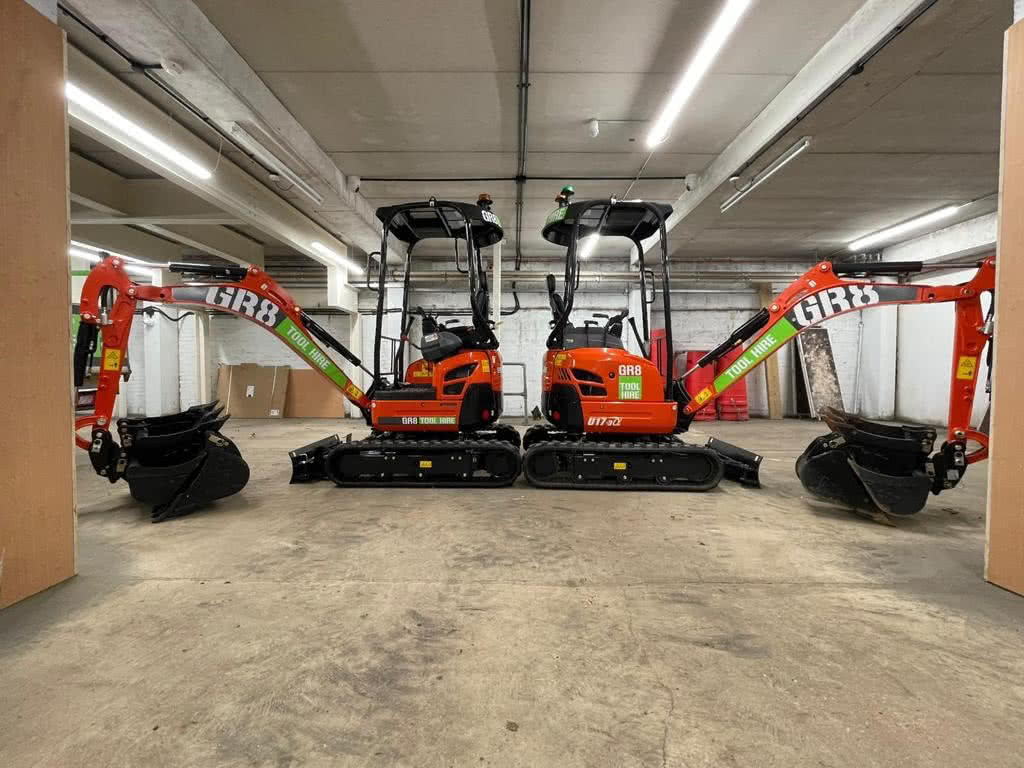
For tight garden access, the 0.75T Micro Digger is usually the first machine to consider. It has a minimum width of 700mm, making it suitable for many narrow access projects. GR8 also offers a 0.75T Mini Digger with a minimum width of 750mm, which can be another good option where access allows.
If you have wider access and more substantial digging to complete, the 1.8 Ton Digger offers more digging depth, stability and productivity while still being compact enough for many domestic and small site projects.
Mini digger size comparison
| GR8 digger | Minimum width | Maximum digging depth | Best suited to |
|---|---|---|---|
| 0.75T Micro Digger | 700mm | 1720mm | Narrow garden access, tight side passages, small trenches and landscaping. |
| 0.75T Mini Digger | 750mm | 1800mm | Compact domestic excavation, garden work, patios and drainage trenches. |
| 1.8 Ton Digger | 990mm | 2310mm | Driveways, deeper trenches, small foundations and heavier domestic work. |
| 3 Ton Digger | 1500mm | 2820mm | Larger excavation, longer trench runs, foundation work and small commercial sites. |
2. Match the digger to the project
The smallest digger is not always the best digger, and the largest digger is not always the fastest choice. The right machine is the one that fits the site, reaches the required depth and handles the material without creating unnecessary damage or access problems.
A 0.75T Micro Digger is ideal where access is the main restriction. It is well suited to back garden excavation, small trenches, shallow drainage runs, pond digging, patio preparation and landscaping where a larger machine simply cannot get in.
A 1.8 Ton Digger is a stronger option when the job needs more digging force, a deeper reach or quicker output. It is often a sensible choice for driveway excavation, small footings, soakaways, longer service trenches and heavier ground conditions where access is wide enough.
A 3 Ton Digger is better suited to larger domestic projects and small commercial jobs where there is plenty of room for access and turning. It can make faster progress on deeper trenches, larger quantities of spoil and more demanding groundworks.
For a broader overview of machine sizes, read GR8’s existing guide: When should you hire a mini digger and what size is right for your project?
3. Check the ground conditions
Ground conditions affect both the digger choice and how long the work will take. Soft, wet ground may make access harder and increase the risk of rutting. Heavy clay can slow digging and stick to buckets. Compacted hardcore, concrete, old foundations or buried rubble may require a breaker attachment rather than a bucket alone.
Before booking, think about what the machine will be digging through:
- Topsoil and garden soil.
- Clay or chalk.
- Hardcore or crushed stone.
- Old patio bases or concrete pads.
- Tree roots and old planting areas.
- Driveway sub-base or compacted ground.
- Unknown made-up ground around older properties.
If you expect concrete, tarmac or compacted hardstanding, ask about pairing your digger with a breaker through GR8’s Digger Pecker Hire range. If the job involves reinstating the ground afterwards, you may also need compaction equipment once the excavation and backfill are complete.
4. Check for underground services before digging
Before breaking ground, consider what may be hidden underneath. Domestic and commercial sites can contain electric cables, gas pipes, water pipes, drainage runs, telecoms, fibre, irrigation pipes and old services that are not obvious from the surface.
The Health and Safety Executive’s guidance on avoiding danger from underground services is built around three main stages: planning the work, locating and identifying buried services, and safe excavation. For projects where services may be present, do not guess. Plan the dig, check available service information, use suitable detection equipment and dig carefully.
GR8 offers CAT 4 Cable Locator Hire and Genny 4 Hire to help identify buried utilities before excavation starts. These are particularly relevant for driveways, front gardens, service trenches, extensions and any work close to known utility routes.
If you are unsure, use the detection equipment before the digger starts and hand dig trial holes where required. Striking a service can be dangerous, expensive and disruptive, so this is one of the most important checks before hiring a mini digger.
5. Plan where the spoil will go
A mini digger can create a large quantity of spoil very quickly. Soil also expands once dug out, so the pile you create can be larger than the compacted ground you removed. Before booking, decide where the material is going.
Ask yourself:
- Will the soil stay on site for levelling?
- Will it go into a skip?
- Will it need moving from the back garden to the front drive?
- Is the route firm enough for barrows or a dumper?
- Is there enough space to stockpile soil safely?
- Will rubble or hardcore need separating from clean soil?
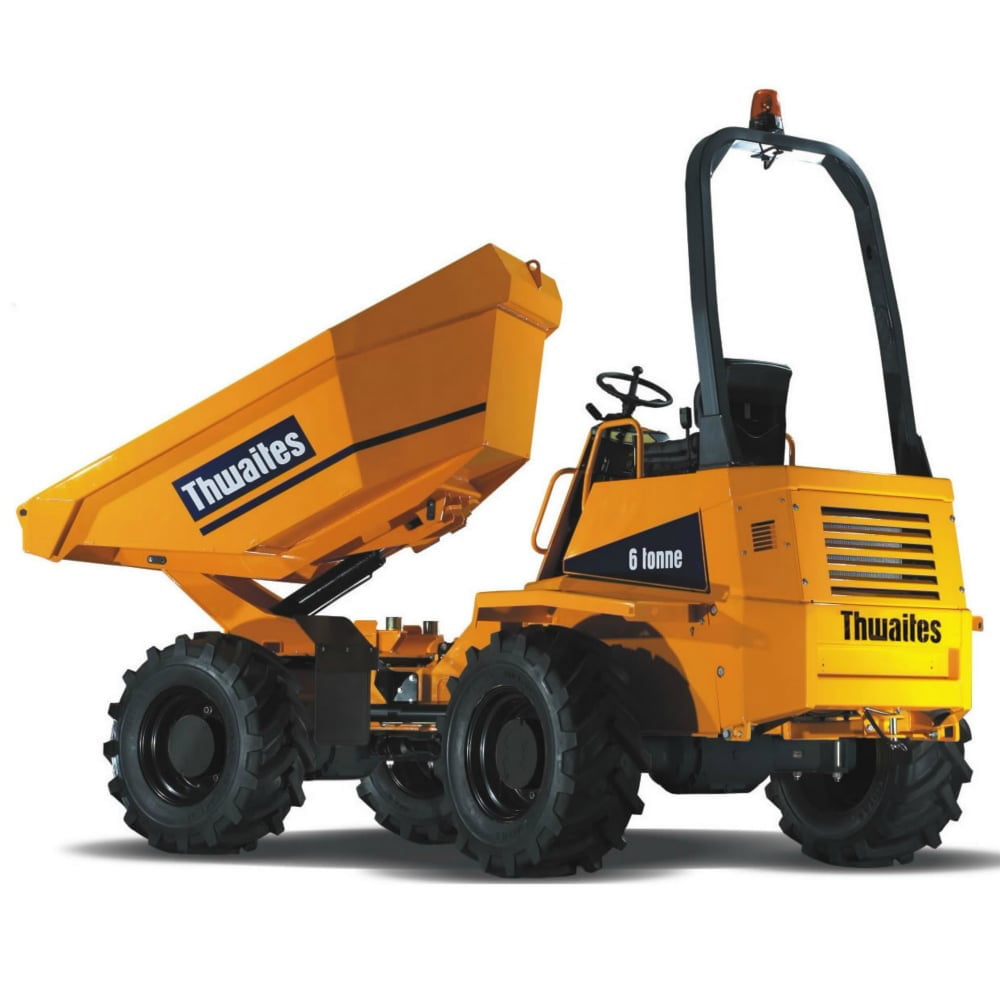
If the material needs moving more than a short distance, pairing the digger with Dumper Hire can save a lot of manual labour. A dumper also keeps the excavation area clearer, reducing delays and making the site easier to manage.
6. Choose the right buckets and attachments
Different buckets suit different tasks. A narrow bucket is useful for service trenches, drainage trenches and more accurate excavation. A wider bucket is better for shifting larger amounts of material. A grading bucket helps with levelling, shaping and finishing.
GR8’s compact diggers are supplied with a selection of buckets, but it is still worth explaining the job clearly when booking. Mention the trench width, digging depth, material type and whether you are finishing a surface, preparing for concrete, digging drainage or moving bulk soil.
If old concrete, tarmac, fence post bases or compacted slabs need breaking, a hydraulic breaker may be more suitable than trying to dig through the obstruction. GR8 can advise on suitable plant attachments through its Pecker Hire range.
7. Protect lawns, patios and driveways
Mini diggers are compact, but they are still tracked machines. On wet lawns, soft soil, clay, decorative paving or finished driveways, tracks can leave marks. Plan the access route and working area before delivery.
Useful precautions include:
- Clearing furniture, pots, bins, toys and loose items before the digger arrives.
- Using ground protection boards where needed.
- Avoiding tight turns on soft lawns.
- Keeping the access route as short and straight as possible.
- Protecting vulnerable edges, kerbs and paving.
- Making sure the operator has clear visibility and enough room to manoeuvre.
If the digger must pass close to walls, conservatories, fencing, parked cars or glass doors, make sure there is enough room and use a banksman where necessary.
8. Think about how long you need the digger for
A one-day hire can be enough for a simple, well-prepared job where access is clear, the spoil plan is ready and the operator knows exactly what needs doing. However, many jobs take longer than expected once you include delivery, setup, digging, loading, tidying, checking levels and dealing with unexpected ground conditions.
For domestic projects, a two-day hire can be more realistic where there is a lot of spoil to move, difficult access, a skip changeover, heavy clay or several separate digging areas. Weekly hire can be more cost-effective for phased work, trade projects or where other trades need time around the excavation.
To avoid wasting paid hire time, prepare the site before the machine arrives. Clear the route, mark the dig area, arrange the skip, check services, remove obstacles and make sure the person operating the machine understands the plan.
9. Book with local delivery and advice
GR8 Tool Hire Cambridge is based at Trinity Hall Industrial Estate on Nuffield Road, Cambridge. The branch supports tool and equipment hire across Cambridge and the surrounding area, with delivery and collection available.
When contacting GR8 Tool Hire Cambridge, provide as much detail as possible:
- Your postcode or site location.
- Access width in millimetres.
- Photos of the route into the work area.
- The type of job you are doing.
- The required digging depth.
- The ground type, if known.
- Whether you need a dumper, breaker, cable locator or Genny.
- Your preferred delivery and collection dates.
This helps the hire team recommend the right machine and supporting equipment, rather than simply sending the first digger that sounds close.
Common Cambridge mini digger hire projects
Mini diggers are useful for a wide range of domestic, landscaping and trade projects around Cambridge, including:
- Back garden levelling before turfing or landscaping.
- Patio, decking and shed base preparation.
- Drainage trenches and soakaways.
- Water pipe, cable duct and service trenches.
- Small foundation trenches for garden rooms or extensions.
- Driveway excavation and sub-base preparation.
- Pond excavation and garden feature construction.
- Removing old borders, raised beds or compacted soil.
- Trade groundworks on smaller sites.
Final booking checklist
- Measure the full access route, not just the gate.
- Choose the smallest machine that can safely and efficiently complete the job.
- Check the required digging depth.
- Identify ground conditions and possible obstructions.
- Check for underground services before excavation.
- Plan spoil movement and skip access.
- Decide whether you need a dumper, breaker, CAT 4 locator or Genny.
- Protect lawns, patios and driveways.
- Prepare the site before delivery.
- Speak to GR8 if you are unsure which digger to hire.
Hire a mini digger in Cambridge
If you need mini digger hire in Cambridge, GR8 can help you choose the right machine for the access, depth, ground conditions and project type. View the full Digger Hire range or contact GR8 Tool Hire Cambridge for local advice, availability and delivery options.
FAQs
What size mini digger is best for a Cambridge garden?
For narrow domestic access, start with a 0.75T micro or mini digger. If access is wider and the job involves deeper or heavier excavation, a 1.8 Ton Digger may be more efficient.
Do I need to measure my gate before hiring a mini digger?
Yes. Measure the gate and the whole access route, including side paths, alleyways, tight turns, steps, drains, low branches and anything fixed to walls or fences.
Can a mini digger fit through a standard garden gate?
Many garden gates can take a micro digger, but it depends on the actual clear opening. GR8’s 0.75T Micro Digger has a minimum width of 700mm. For a full access guide, read Will a Mini Digger Fit Through a Garden Gate?
Should I hire a dumper with a mini digger?
If you need to move soil from the work area to a skip, driveway or stockpile, a dumper can save significant time and reduce manual handling.
Do I need to check for underground services before digging?
Yes. You should consider buried utilities before any excavation. GR8 offers CAT 4 Cable Locator Hire and Genny 4 Hire to help locate buried services before digging.
Can I use a mini digger for driveway preparation?
Yes, provided the machine has suitable access and the correct setup for the ground conditions. For larger driveway excavation, a 1.8 Ton or 3 Ton Digger may be more efficient than a micro digger.
How long should I hire a mini digger for?
Simple, well-prepared jobs may be completed in a day, but two days or weekly hire can be more realistic where there is heavy soil, difficult access, spoil movement or several separate excavation areas.
Can GR8 help me choose the right digger?
Yes. Share your access measurements, project type, ground conditions, digging depth and preferred dates with GR8, and the team can recommend a suitable digger and any supporting equipment.
Need this equipment? Hire it here.