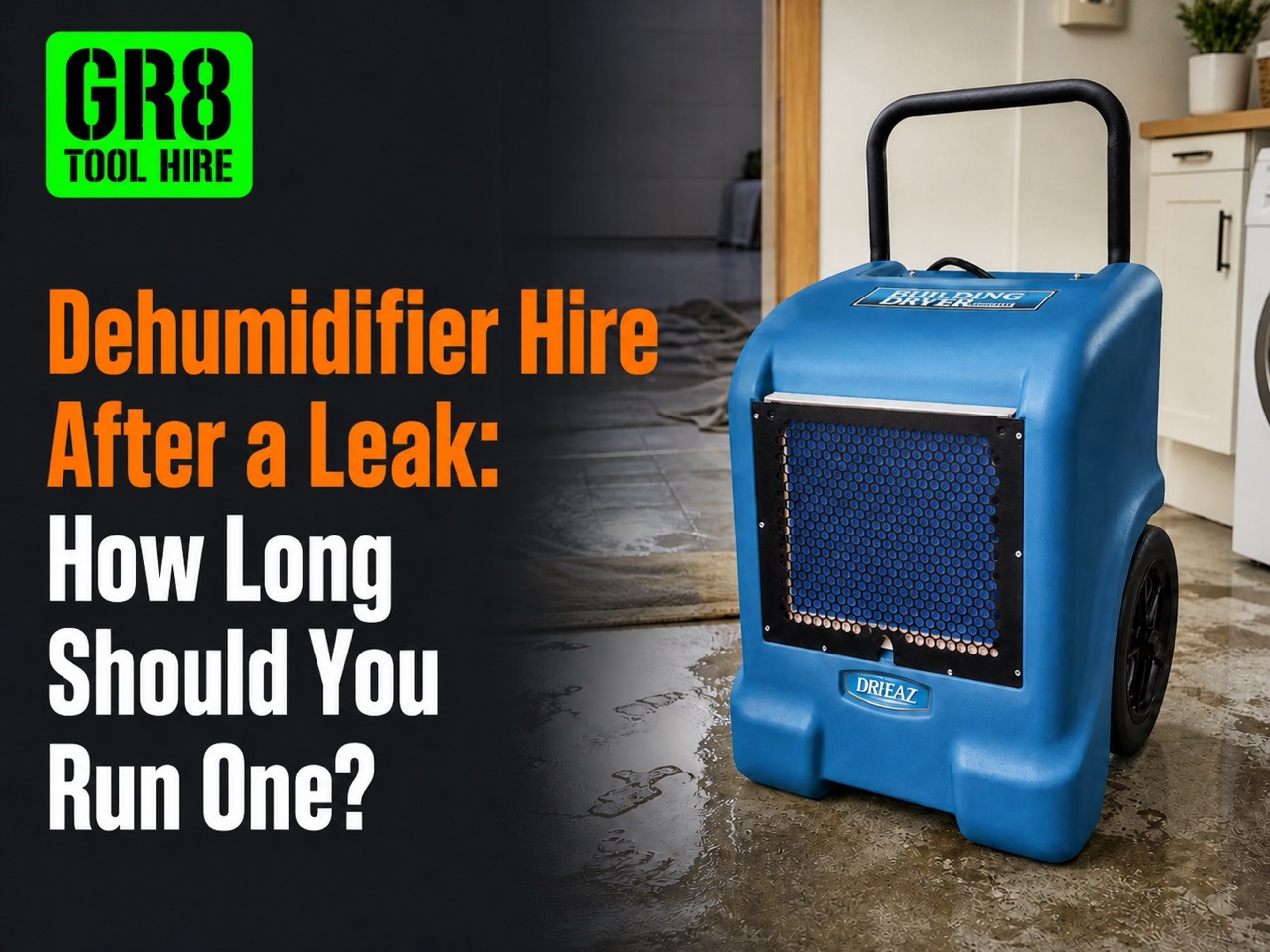

After a leak, a dehumidifier usually needs to run continuously during the early drying stage, often for at least 24 to 48 hours once the leak has been stopped and standing water has been removed. A small, contained leak may dry within a few days, while wet carpets, plaster, timber, underlay or water-damaged building materials can take a week or longer.
The right drying time depends on how much water escaped, how long it sat there, what materials became wet and whether airflow is being used properly. GR8 offers Dehumidifier Hire, Carpet Dryer Hire and Industrial Fan Air Mover Hire to help dry rooms, carpets and affected surfaces after leaks, spills and water damage.
Quick answer: how long should you run a dehumidifier after a leak?
| Leak situation | Typical drying time | Recommended hire setup |
|---|---|---|
| Small leak caught quickly on a hard floor | 24 to 72 hours | 1 dehumidifier, windows closed, regular checks. |
| Wet carpet, rug or underlay | 3 to 7 days or more | Dehumidifier plus Carpet Dryer. |
| Damp plaster, skirting, timber or ceiling | Several days to 2 weeks or longer | Dehumidifier plus controlled airflow and moisture checks. |
| Water in wall cavities, floors or insulation | Varies significantly | Professional assessment plus drying equipment. |
| Floodwater, sewage or contaminated water | Do not treat as simple drying | Professional clean-up and safety checks first. |
These are practical guide times, not guarantees. Drying should continue until the room and affected materials are properly dry, not simply until the surface looks better.
Step 1: stop the leak first
A dehumidifier cannot solve an active leak. Before hiring drying equipment, stop the water at source. This might mean turning off the water supply, isolating an appliance, repairing a pipe, dealing with a roof leak or calling a plumber.
If water is still entering the room, the dehumidifier will keep removing moisture from the air while the leak keeps adding more. That wastes time, electricity and hire cost.
Once the source has been stopped, remove as much standing water as possible before setting up drying equipment. Towels, mops, wet vacuum equipment or professional extraction may be needed depending on the amount of water.
What to do in the first 30 minutes after a leak
Fast action can reduce damage. If it is safe to enter the area:
- Stop the source of water.
- Turn off affected appliances.
- Keep away from wet electrical sockets, cables and fittings.
- Move furniture, rugs and belongings out of the wet area.
- Remove standing water where possible.
- Lift wet rugs and loose mats.
- Ventilate briefly if needed to clear immediate damp air, then close windows when dehumidifying.
- Photograph the damage if you may need an insurance record.
- Arrange drying equipment as soon as possible.
If water has affected electrics, ceilings, sewage, floodwater or structural materials, get professional advice before using the room.
Step 2: choose the right drying equipment
A dehumidifier removes moisture from the air. As wet materials release moisture, the dehumidifier collects it and helps reduce humidity in the room. GR8’s Dehumidifier Hire option is a BD1000 dehumidifier with an extraction range of 21 to 48 litres per 24 hours, depending on conditions.
For wet carpets, floors and surfaces, a dehumidifier works even better when paired with air movement. A Carpet Dryer pushes focused air across wet areas beneath carpets or inside wall areas, helping moisture evaporate from the surface. The dehumidifier then removes that moisture from the air.
For larger rooms, open-plan areas, site drying or general airflow, an Industrial Fan Air Mover can help move air around the affected space.
Dehumidifier, carpet dryer or air mover?
| Equipment | What it does | Best for |
|---|---|---|
| Dehumidifier | Removes moisture from the air and collects it as water. | Damp rooms, plaster, general drying, leak recovery and moisture control. |
| Carpet Dryer | Pushes focused air across wet carpets and surfaces. | Wet carpets, underlay, floor areas and targeted drying. |
| Industrial Fan Air Mover | Moves larger volumes of air around a room or work area. | Larger spaces, general airflow, site drying and ventilation support. |
Step 3: set the room up properly
For most dehumidifier drying, keep windows and external doors closed. The aim is to dry the same body of indoor air rather than continually bringing in fresh damp air from outside. Internal doors can be managed depending on whether you are drying one room or a larger area.
Place the dehumidifier where air can move freely around it. Do not push it tight against a wall, block the vents, cover it or bury it behind furniture. If the unit has a drain hose option and there is a suitable drain point, continuous drainage can be useful for longer drying periods.
A practical setup for a wet carpet or room leak is:
- Dehumidifier positioned with clear airflow.
- Carpet dryer aimed across the wet carpet or floor area.
- Windows and external doors closed.
- Furniture moved away from wet walls and skirting.
- Tank checked and emptied regularly, unless continuous drainage is used.
- Cables routed safely away from wet areas and walkways.
Should windows be open or closed with a dehumidifier?
Keep windows closed when using a dehumidifier for leak drying. Open windows may help with initial ventilation immediately after a spill, but once the dehumidifier is running, closed windows allow the machine to lower the humidity inside the affected room more effectively.
If the room smells damp, the answer is usually not to leave windows wide open while dehumidifying. Instead, remove wet materials where needed, create controlled airflow, run the dehumidifier and monitor progress.
Can you run a dehumidifier overnight?
In many leak-drying situations, continuous running is useful during the early drying stage, including overnight, provided the equipment is safe to use and set up correctly. Before leaving it running, check the socket, cable route, airflow, tank and manufacturer instructions.
Do not use drying equipment if electrical sockets, plugs, lights, extension leads or appliances have been affected by water. If there is any doubt, have the electrics checked by a qualified electrician first.
How do you know when the room is dry?
Do not rely only on the surface appearance. Walls, timber, flooring and underlay can look dry while still holding moisture below the surface. Drying should continue until the affected materials are properly dry.
Signs that drying is progressing include:
- The dehumidifier collects less water each day.
- The room no longer smells damp or musty.
- Carpets and flooring no longer feel cold or clammy.
- Skirting boards and walls feel dry to the touch.
- Humidity remains stable after the equipment has been turned off for a few hours.
- Moisture meter readings, where used, show the affected materials have dried.
For larger leaks, insurance claims or water-damaged building materials, professional moisture testing may be needed. This is especially important if water may have reached wall cavities, subfloors, insulation or ceilings.
Can a room dry too quickly?
Yes, in some situations. It can be tempting to add a lot of heat and force the room dry as quickly as possible, but rapid drying can sometimes cause problems with plaster, screeds, timber and fitted woodwork. Controlled drying is usually better than extreme heat.
A dehumidifier, sensible airflow and gentle warmth can work well together, but avoid overheating the area. If you need warmth as part of the drying setup, ask GR8 about suitable equipment in the Heating and Cooling Hire range.
For more help choosing between heaters, dehumidifiers and fans, read GR8’s guide: Do you need a heater, dehumidifier or fan?
When a dehumidifier alone may not be enough
A dehumidifier is useful for many leaks and damp rooms, but some water damage needs more than simple equipment hire. Get professional help if:
- The water came from sewage, floodwater or contaminated sources.
- Water has entered wall cavities, insulation or subfloors.
- Ceilings are bulging, sagging or heavily stained.
- Electrical fittings, sockets or wiring have been affected.
- There is visible mould growth.
- Timber floors have started to warp or lift.
- The leak has been ongoing for some time.
- You need documented drying records for an insurance claim.
Do not ignore hidden water damage. A room can appear dry while moisture remains trapped behind skirting boards, under floors or inside walls.
Insurance and documentation checklist
If you may need to speak to your insurer, keep a simple record of the leak and drying process:
- Photograph the affected areas before moving items, if safe.
- Keep records of plumber or repair visits.
- List damaged items and materials.
- Record when drying equipment was installed.
- Note how much water the dehumidifier collects each day.
- Keep hire invoices and receipts.
- Take follow-up photos as the room dries.
For serious leaks, your insurer may require specialist drying or moisture readings before repair work starts.
Best setup after a domestic leak
For a typical domestic leak where carpets, skirting boards, plaster or flooring have become wet, a practical hire setup is often:
- One Dehumidifier to remove moisture from the air.
- One Carpet Dryer for wet carpets and floor areas.
- An Industrial Fan Air Mover for larger rooms or wider airflow.
- Closed windows and controlled internal airflow.
- Regular tank emptying or continuous drainage.
- Daily checks on damp patches, odour and water collection.
For larger spaces or heavier water damage, speak to GR8 about whether more than one unit is needed.
How long should you hire the equipment for?
For a very small leak, a short hire period may be enough. For wet carpet, plaster, timber or flooring, plan for several days at minimum. It is usually better to allow enough time for controlled drying than to stop too early and discover that damp remains underneath.
If you are unsure, start with the likely drying time based on the severity of the leak and then monitor progress daily. The amount of water collected by the dehumidifier, the condition of affected materials and any damp smell will help indicate whether more drying time is needed.
Hire a dehumidifier after a leak
After a leak, act quickly but safely. Stop the water, remove standing water, protect electrics, set up controlled drying and keep checking progress. A dehumidifier may need to run for days rather than hours, especially if moisture has soaked into carpets, plaster, timber or flooring.
View GR8’s Dehumidifier Hire, Carpet Dryer Hire and Industrial Fan Air Mover Hire, or browse the full Heating and Cooling Hire range.
FAQs
How long should I run a dehumidifier after a small leak?
For a small leak caught quickly, 24 to 72 hours may be enough. Continue drying if the room still smells damp, surfaces feel cold or clammy, or the dehumidifier is still collecting a lot of water.
Should I leave the dehumidifier on all day after a leak?
During the early drying stage, continuous running is often useful, provided the equipment is safe, correctly positioned and regularly checked.
Should windows be open or closed when using a dehumidifier?
Keep windows and external doors closed while dehumidifying. This allows the unit to dry the indoor air rather than pulling in fresh damp air from outside.
Do I need a carpet dryer as well as a dehumidifier?
If carpets, rugs, underlay or floors are wet, a carpet dryer can help speed surface drying while the dehumidifier removes moisture from the air.
Can I use a heater instead of a dehumidifier?
A heater alone does not remove moisture. Gentle heat can help moisture evaporate, but a dehumidifier is needed to collect that moisture from the air.
How do I know if plaster is dry after a leak?
Surface appearance is not enough. Check for damp smell, cold or clammy patches, stable humidity and, for larger leaks, use moisture readings or professional assessment.
Can I sleep in a room with a dehumidifier running?
That depends on the room condition, noise, air quality and electrical safety. Do not sleep in a room where water has affected electrics, ceilings, contaminated materials or mould.
When should I call a professional after a leak?
Call a professional if water has affected electrics, ceilings, wall cavities, insulation, subfloors, sewage-contaminated areas, visible mould or an insurance claim.
Need this equipment? Hire it here.