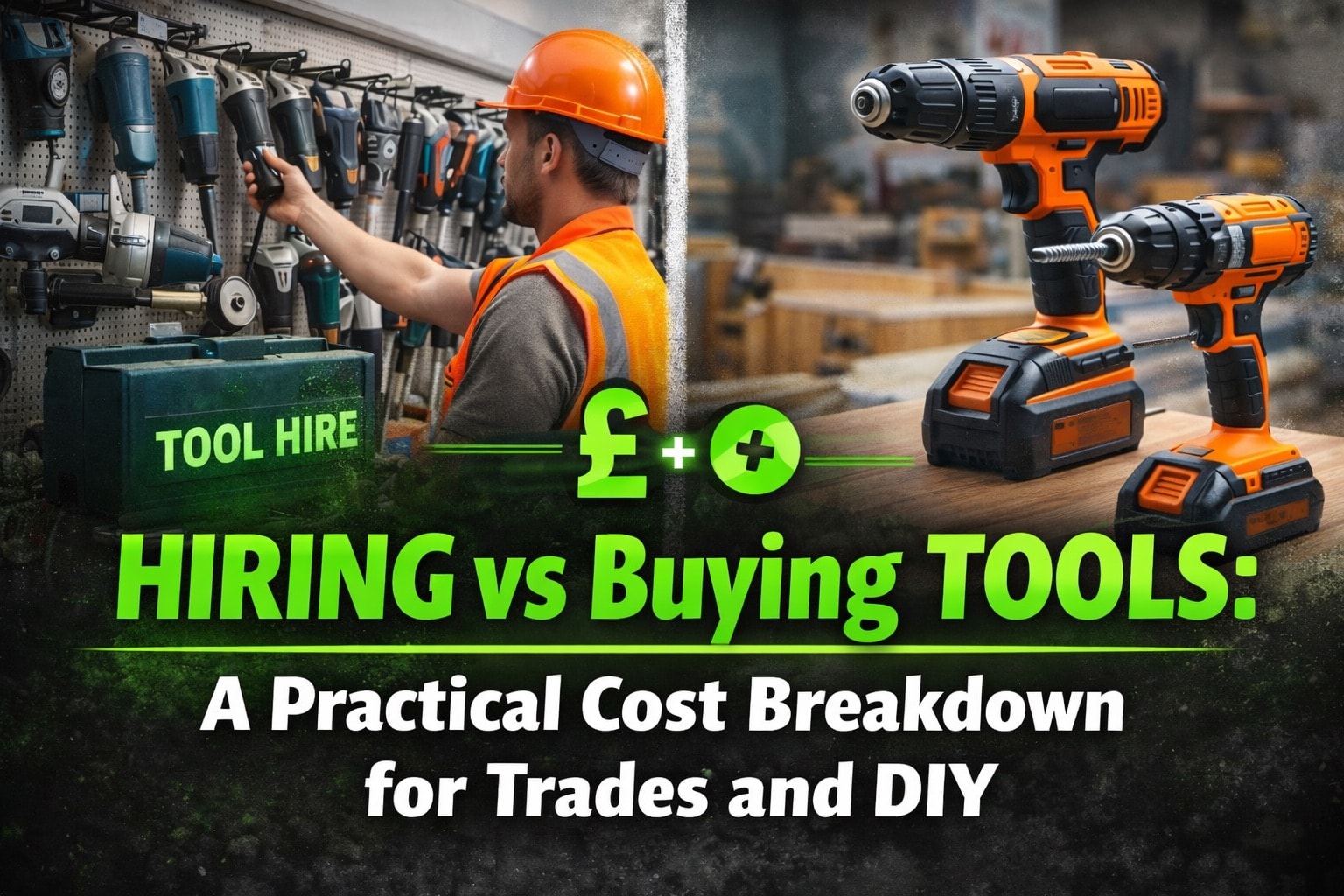

Whether you are a tradesperson or tackling a one-off DIY project, the question often comes up early on: should you hire the tools you need, or buy them outright?
On the surface, buying can feel like the better long-term option. You own the equipment, it is always there when you need it, and there are no hire periods to worry about. In reality, the decision is rarely that simple. Once you factor in real costs, usage frequency, storage, and maintenance, hiring tools is often the more sensible and cost-effective choice.
This guide breaks down the true costs of hiring versus buying tools in the UK, with practical examples to help you decide what makes sense for your project.
The True Cost of Buying Tools (What Most People Forget)
The purchase price is only one part of the cost of owning tools. Many people underestimate how quickly additional expenses add up.
Upfront purchase cost
Larger equipment such as diggers, plate compactors, concrete breakers, and floor sanders requires a significant initial outlay. Even mid-range professional tools can cost hundreds or thousands of pounds.
Servicing, repairs, and wear
Tools need regular servicing to remain safe and effective. Bearings wear out, engines need servicing, and electrical components fail over time. These costs sit with the owner, not the manufacturer.
Storage and transport
Many tools require dry, secure storage. Larger items may also need a suitable vehicle or trailer to transport them to site, adding further expense.
Depreciation and obsolescence
Tools lose value over time. Technology changes, safety standards evolve, and equipment that once held its value can quickly become outdated or harder to sell on.
Downtime when tools fail
If a tool breaks mid-project, work often stops. Waiting for parts or repairs can delay jobs and increase overall costs, especially for trades working to deadlines.
The Real Cost of Hiring Tools
Hiring tools removes many of the long-term costs associated with ownership.
- No large upfront purchase cost
- No servicing or repair bills
- No long-term storage requirements
- Access to well-maintained, compliant equipment
With tool hire, you pay only for the period you need the equipment. For short-term or specialist tasks, this is often far more economical than buying.
For many projects, particularly those involving groundwork or renovation, hiring allows you to use professional-grade equipment without tying up capital.
When Buying Tools Actually Makes Sense
Hiring is not always the right answer, and being honest about that builds trust.
Buying tools can make sense when:
- The tool is used frequently or daily
- It is a low-maintenance item with minimal servicing needs
- The cost is relatively low and storage is not an issue
- The tool is essential to your core trade
Hand tools and smaller power tools often fall into this category. For these items, ownership can be practical and cost effective.
When Hiring Tools Is the Smarter Choice
For many larger or specialist tools like plant hire, hiring is usually the better option.
Digger hire
Mini diggers and excavators are expensive to buy and maintain. Hiring allows you to choose the right size for each job, whether it is a narrow access garden project or larger groundwork.
Compaction equipment
Plate compactors and trench rammers are often used for short periods. Hiring avoids long-term storage and ensures you always have the correct machine for the material you are compacting.
Concrete breakers
Breakers experience heavy wear and tear. Hiring ensures you get a reliable machine with the correct bits for the job, without ongoing maintenance costs.
Floor sanders
Most people only need a floor sander once or twice. Buying one for a single renovation rarely makes financial sense compared to hiring.
Generators and site equipment
Generators, lighting, and site setup equipment are ideal hire items, especially for temporary works, events, or seasonal use.
Cost Comparison Examples (Hire vs Buy)
Consider these typical scenarios:
A floor sanding project
Buying a professional floor sander for a single renovation could cost several hundred pounds, plus storage and maintenance. Hiring one for a weekend is a fraction of that cost.
A patio installation
A plate compactor may only be needed for a day or two. Hiring avoids paying for equipment that will sit unused once the project is complete.
Breaking out concrete footings
Concrete breakers are heavy-duty tools with significant wear. Hiring provides access to powerful equipment without the long-term commitment.
Why Trades Hire Tools Even When They Own Equipment
Even experienced tradespeople regularly hire tools. This is not a sign of lacking equipment, but a practical business decision.
- Cash flow is preserved by avoiding large purchases
- Specialist tools can be hired only when required
- Breakdowns do not halt work
- The right tool can be chosen for each specific job
Hiring provides flexibility, particularly when workloads vary or projects differ in scale.
How GR8 Tool Hire Makes Hiring Simple
GR8 Tool Hire provides access to a wide range of tools and equipment suitable for both trade and DIY use. With flexible hire periods and well-maintained machinery, hiring becomes straightforward and cost effective.
If you are unsure whether hiring or buying is the better option for your project, the GR8 Tool Hire team can offer practical advice based on your needs.
Not sure which tools you should hire for your next job?
Speak to GR8 Tool Hire for guidance and access to reliable equipment when you need it.
Need this equipment? Hire it here.