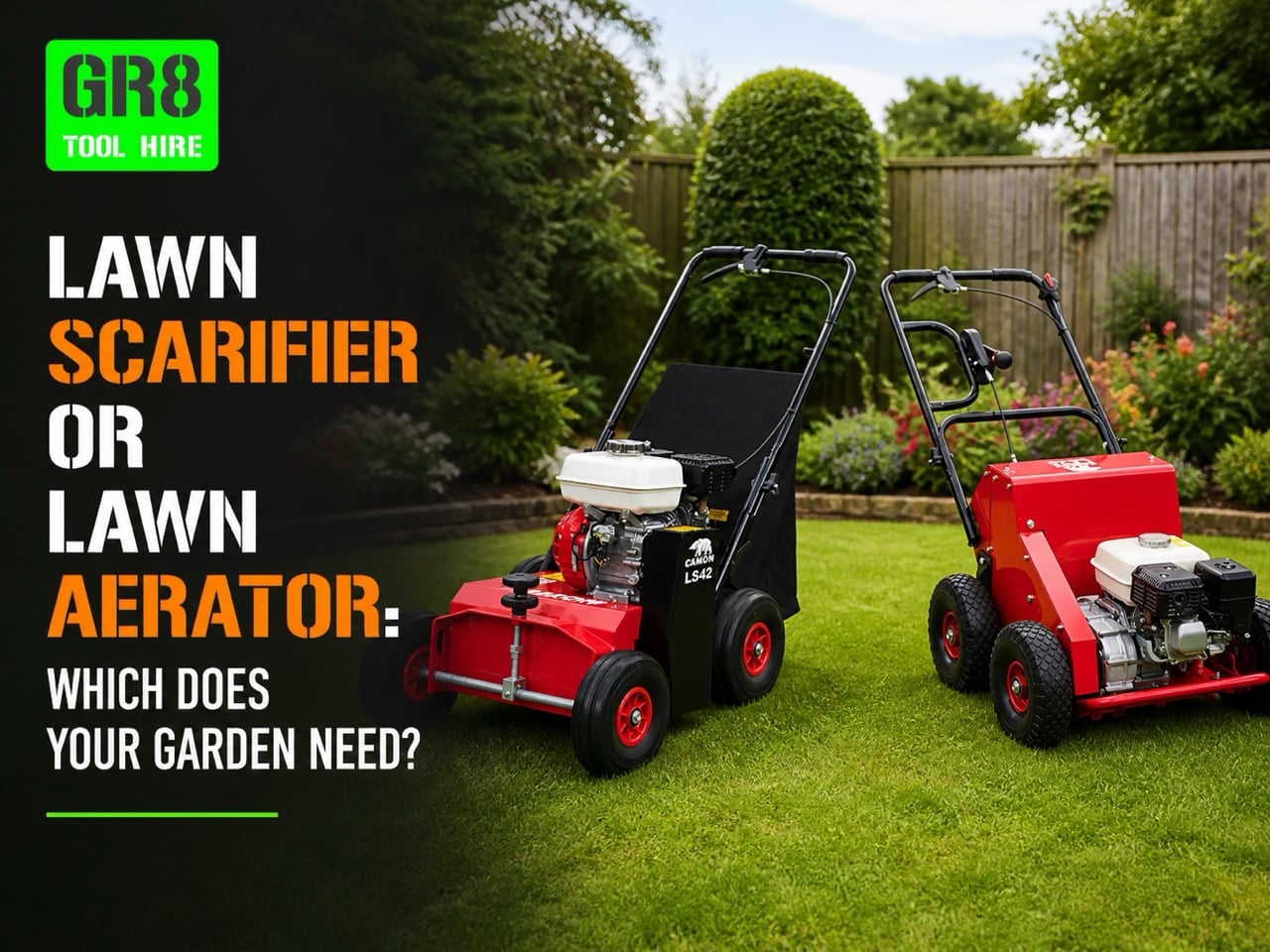

Use a lawn scarifier if your lawn has moss, thatch, dead grass and surface debris. Use a lawn aerator if the soil is compacted, hard, poorly drained or struggling to let air, water and nutrients reach the roots. If your lawn has both surface thatch and compacted soil, it may benefit from both treatments.
At GR8 Tool Hire, you can hire both a Lawn Scarifier and a Lawn Aerator, making it easier to renovate larger lawns without buying specialist equipment you may only use occasionally.
Scarifier vs aerator: the simple difference
| Tool | What it treats | Signs you need it | GR8 hire option |
|---|---|---|---|
| Lawn scarifier | Moss, thatch, dead grass and surface debris. | Spongy lawn, visible moss, weak growth, lots of dead material between grass blades. | Lawn Scarifier Hire |
| Lawn aerator | Compacted soil and poor movement of air, water and nutrients into the root zone. | Hard ground, puddling, worn areas, thin grass, heavy foot traffic or poor drainage. | Lawn Aerator Hire |
Quick lawn diagnosis guide
| Lawn problem | Most likely cause | Best tool to hire |
|---|---|---|
| The lawn feels spongy underfoot. | Thatch build-up or moss. | Lawn Scarifier |
| Water puddles on the lawn after rain. | Compacted soil or poor drainage. | Lawn Aerator |
| There is visible moss between the grass. | Moss and surface organic matter. | Lawn Scarifier |
| The ground feels hard when pushed with a fork. | Soil compaction. | Lawn Aerator |
| The lawn is thin, tired and struggles to recover. | Often a mix of thatch, compaction and weak roots. | Scarifier and aerator together. |
| You are renovating a lawn before overseeding. | The lawn needs surface clearance and better soil contact. | Scarifier first, then aerator if compacted. |
What does a lawn scarifier do?
A lawn scarifier works through the surface of the lawn to remove moss, thatch and dead organic material. Thatch is the layer that builds up between the green grass and the soil. A small amount is normal, but too much can stop water, air and nutrients reaching the roots properly.
Scarifying clears that surface layer and gives the grass space to recover. It can make a tired lawn look worse for a short time, especially if there is a lot of moss, but that temporary thinning is part of the renovation process.
GR8’s Lawn Scarifier Hire option is a petrol-powered Camon LS42 Scarifier. It has a 420mm cutting width and is designed to remove thatch and moss from lawns to promote healthier growth.
When should you hire a lawn scarifier?
Hire a scarifier when the main issue is on the lawn surface. This usually means moss, thatch, dead grass, flattened debris or a spongy layer that stops water and nutrients reaching the soil.
A scarifier is especially useful if:
- The lawn has visible moss patches.
- The grass feels soft or springy underfoot.
- You cannot easily see soil between the grass blades.
- Water seems to sit above the soil rather than soaking in.
- The lawn looks dull even after mowing and feeding.
- You are preparing to overseed thin areas.
For small lawns, hand raking may be enough. For medium or large lawns, hiring a mechanical scarifier can save time and give a more consistent finish.
What does a lawn aerator do?
A lawn aerator makes holes in the soil to relieve compaction and improve movement of air, water and nutrients into the root zone. This is different from scarifying because aeration works below the surface rather than mainly clearing the layer above it.
Soil compaction is common where a lawn has heavy foot traffic, children playing, pets, regular mowing, garden furniture, clay soil or wet conditions. When soil becomes compacted, roots struggle to grow deeply and water can sit on the surface.
GR8’s Lawn Aerator Hire option is a Camon LA25 Lawn Aerator with spike or hollow core tines, a 400mm working width and an aeration depth of 75mm.
When should you hire a lawn aerator?
Hire a lawn aerator when the problem is soil structure rather than surface debris. Aeration is particularly helpful where the lawn feels hard, drains slowly or has thin, weak grass despite regular care.
An aerator is a good choice if:
- The ground feels hard or compacted.
- Rainwater puddles or drains slowly.
- The lawn gets heavy use from children, pets or foot traffic.
- The grass has shallow roots.
- The lawn dries out quickly in summer but becomes boggy in winter.
- You have clay soil or areas that are regularly walked over.
- You are preparing the lawn for overseeding and top dressing.
Should you scarify or aerate first?
There is not one single answer for every lawn. The best order depends on the lawn’s condition.
If the lawn has heavy moss and thatch, scarify first. Clearing the surface removes the barrier between the grass and soil, making it easier for water, seed and top dressing to reach where they need to go. Once the debris has been removed, aerate if the soil is compacted.
If the lawn has very little thatch but the soil is badly compacted, aerating first may be sensible. This helps open the soil and improve drainage before lighter surface renovation.
For many UK lawns, the practical renovation order is:
- Mow the lawn slightly shorter than usual.
- Scarify to remove moss and thatch.
- Clear the debris thoroughly.
- Aerate if the soil is compacted.
- Top dress if needed.
- Overseed thin areas.
- Water and protect the lawn while it recovers.
Can you scarify and aerate the same lawn?
Yes. Scarifying and aerating solve different problems, so they are often used together during a lawn renovation. Scarifying clears surface material; aerating opens compacted soil. Combined properly, they can help water, air, seed and nutrients reach the root zone more effectively.
However, both treatments can stress the lawn in the short term. Only carry them out when the grass is actively growing and able to recover. Avoid heavy renovation during drought, frost, waterlogging or extreme heat.
Best time of year to scarify and aerate a lawn in the UK
The best time is when the grass is actively growing and conditions are mild. For most UK lawns, this means spring or early autumn. Autumn is often ideal for heavier renovation because the soil is still warm, rainfall is more reliable and the lawn has time to recover before winter.
| Season | Scarifying | Aerating | Notes |
|---|---|---|---|
| Early spring | Light scarifying may be suitable if growth has started. | Useful if the ground is firm but not waterlogged. | Avoid aggressive work if the lawn is still weak after winter. |
| Late spring | Good for active growth, provided conditions are not too dry. | Good for compacted areas. | Follow with watering if rainfall is low. |
| Summer | Usually avoid heavy scarifying during hot or dry periods. | Light aeration may help compacted areas, but avoid drought-stressed lawns. | Protect the lawn from heat stress. |
| Early autumn | Often the best time for heavier scarifying. | Excellent time for aeration and overseeding. | Warm soil and moisture help recovery. |
| Winter | Not recommended. | Not recommended on frozen or waterlogged ground. | Wait until conditions improve. |
How to prepare before hiring lawn equipment
Good preparation makes the job faster and improves results. Before using a scarifier or aerator:
- Mow the lawn first, but do not scalp it.
- Remove branches, stones, toys, furniture and hoses.
- Mark sprinkler heads, shallow cables or hidden obstacles.
- Check that the ground is not waterlogged or frozen.
- Plan where the removed thatch and moss will go.
- Have grass seed and top dressing ready if you are renovating.
- Water lightly beforehand if the lawn is very dry, but do not work on saturated ground.
Step-by-step lawn renovation plan
Step 1: Mow the lawn
Mow the lawn slightly shorter than usual so the scarifier or aerator can work properly. Do not cut so low that the grass is scalped or weakened.
Step 2: Scarify if there is moss or thatch
Use a Lawn Scarifier to remove moss, thatch and dead material. Work steadily and avoid being too aggressive on the first pass if the lawn has not been scarified for years.
Step 3: Clear the debris
Scarifying can produce a surprising amount of material. Rake up the debris thoroughly so it does not continue blocking light, air and water.
Step 4: Aerate compacted soil
If the soil is hard or drainage is poor, use a Lawn Aerator to open the root zone. Hollow core aeration is particularly useful where compaction is severe because it removes plugs of soil rather than simply pushing holes into it.
Step 5: Top dress and overseed
After scarifying and aerating, overseeding can help thicken thin areas. Top dressing can help improve surface levels and support seed-to-soil contact.
Step 6: Water and protect the lawn
Keep the lawn lightly watered during establishment, especially after overseeding. Avoid heavy use while the grass recovers.
What will the lawn look like afterwards?
Immediately after scarifying, the lawn can look thin, patchy or rough. This is normal, especially if a lot of moss and thatch has been removed. The goal is not instant cosmetic improvement; it is to create better conditions for healthier growth.
After aeration, you may see holes or soil cores on the surface. These are also normal. Cores can usually be left to break down naturally or brushed back into the lawn depending on the finish you want.
Common mistakes to avoid
- Scarifying at the wrong time: Avoid heavy scarifying during drought, frost, waterlogging or extreme heat.
- Working too aggressively: Start carefully, especially on a lawn that has not been renovated for a long time.
- Leaving debris behind: Remove moss and thatch so the lawn can breathe.
- Aerating waterlogged ground: Wait until the soil is moist but not saturated.
- Skipping aftercare: Overseeding, top dressing and watering often make the difference between damage and recovery.
- Using the wrong tool: Scarifiers deal with surface thatch and moss. Aerators deal with compacted soil.
Hire or buy: why hiring often makes sense
Most domestic lawns only need scarifying or aerating at certain times of year. For many homeowners, buying specialist equipment means paying for a machine that spends most of the year in storage.
Hiring gives you access to robust petrol-powered equipment without long-term storage, servicing or maintenance. It is especially useful for medium and larger gardens, one-off lawn renovations, seasonal lawn care and landscaping projects.
GR8’s Gardening Tool Hire range also includes useful equipment for wider garden projects, such as Turf Cutter Hire, Rotavator Hire and Stump Grinder Hire.
Which tool should you hire?
If the problem is moss, thatch and a spongy surface, hire a Lawn Scarifier. If the problem is hard, compacted soil or poor drainage, hire a Lawn Aerator. If your lawn has both problems, use both tools in the right order and allow time for recovery.
For help choosing the right equipment, browse GR8 Gardening Tool Hire or contact your nearest GR8 branch for availability and advice.
FAQs
Is scarifying the same as aerating?
No. Scarifying removes moss, thatch and dead material from the lawn surface. Aerating creates holes in the soil to relieve compaction and improve movement of air, water and nutrients.
Should I scarify or aerate first?
If the lawn has heavy moss or thatch, scarify first and clear the debris, then aerate if the soil is compacted. If the lawn has little thatch but severe compaction, aeration may be the priority.
Can I scarify and aerate on the same day?
Yes, if the lawn is healthy enough and conditions are suitable. For tired or stressed lawns, it may be better to stage the work and allow recovery.
Will my lawn look worse after scarifying?
It can look worse temporarily, especially if there is a lot of moss. This is normal. Scarifying removes unwanted material so the lawn can recover and grow more strongly.
How often should I aerate my lawn?
It depends on soil type and use. Heavily used lawns, clay soils and compacted areas may benefit from regular aeration, while lightly used lawns may need it less often.
Can I scarify during summer?
Avoid heavy scarifying during hot or dry weather because the lawn may struggle to recover. Spring and early autumn are usually better.
Do I need to overseed after scarifying?
Overseeding is often worthwhile if the lawn looks thin after moss and thatch have been removed. It helps thicken the lawn and fill bare patches.
Can I hire lawn care equipment from GR8?
Yes. GR8 hires lawn scarifiers, lawn aerators and a wider range of gardening tools for domestic and trade garden projects.
Need this equipment? Hire it here.