When the sun finally arrives, a British building site changes character overnight. A loft conversion becomes an oven by mid-morning, an enclosed basement holds warm, stale air with nowhere to go, and every cut into dry brick or concrete throws up dust that hangs in the still air. Add a fresh screed or a coat of plaster trying to dry in the heat, and summer brings its own set of headaches.
Most of these are solved with the right kit rather than sheer willpower. Below are the summer problems we see most across sites in Bishops Stortford, Saffron Walden, Cambridge and the surrounding areas, and the equipment that deals with them. The theme is simple: move the air, control the dust, and keep your crew working safely when the temperature climbs.
What really changes on site in summer
Two things shift when the weather turns. First, heat builds up in exactly the places you cannot avoid working: roof voids, lofts, top floors under warm slate, plant rooms, containers and any enclosed space with poor airflow. Warm air rises and sits, and with no way to shift it the temperature indoors can climb well above what it is outside. There is no legal maximum working temperature in the UK, but the Health and Safety Executive (HSE) expects conditions to stay reasonable, so it pays to manage heat rather than hope the crew copes.
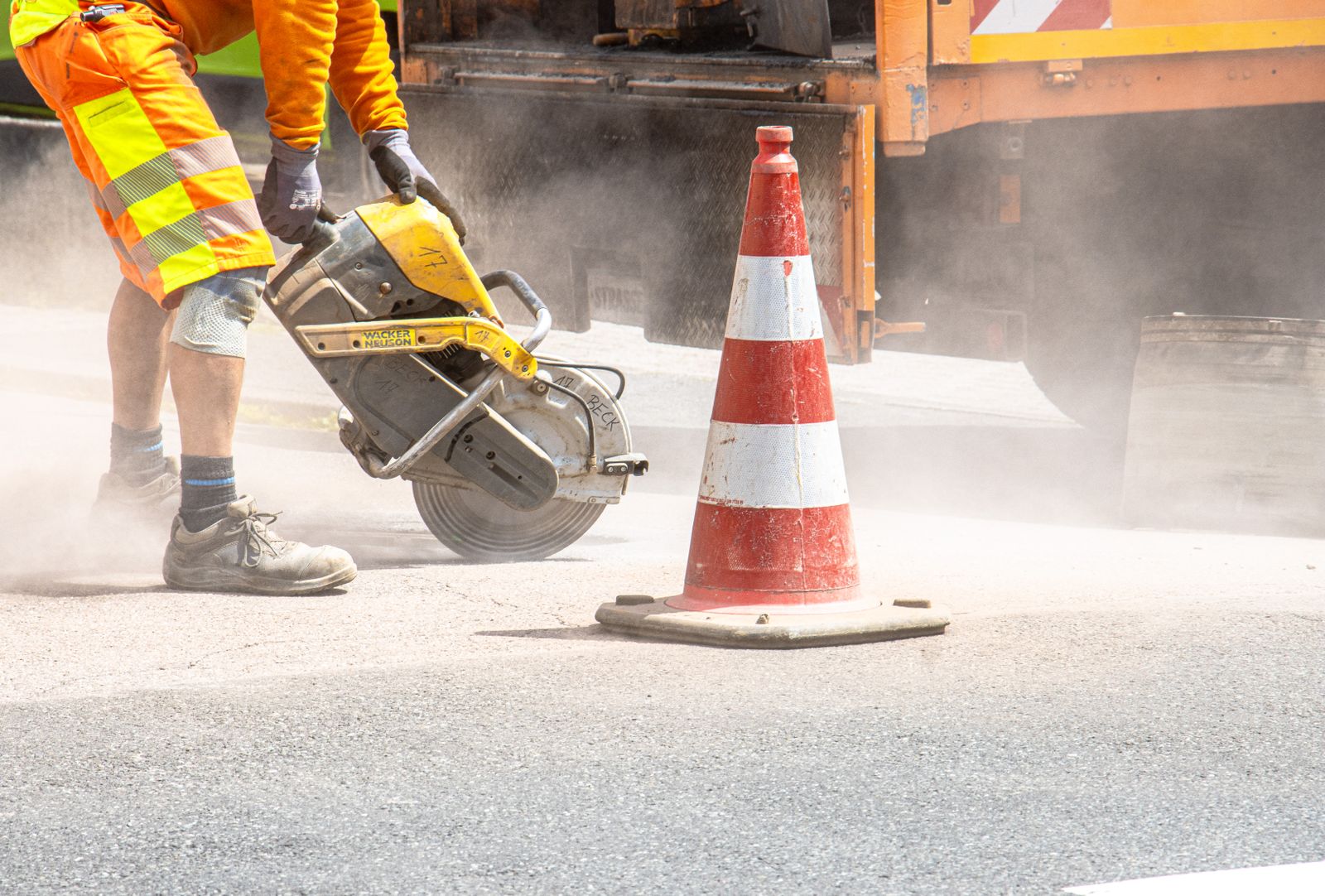
Second, dry weather makes dust far worse. Damp winter conditions keep a lot of muck down; a dry July does the opposite. Cutting, grinding, chasing and sweeping send fine particles into the air, and in still, warm conditions that dust lingers instead of settling. When you are working stone, concrete, brick or screed, some of it is respirable crystalline silica, the fine dust the HSE wants kept out of your lungs.
Moving air: fans and air movers
The most useful piece of warm-weather kit is something that shifts a large volume of air. Our industrial fan and air mover hire covers robust, portable units that deliver a serious amount of air movement, and they earn their keep in two distinct jobs.
Cooling the crew versus ventilating the space
Cooling people is about moving air across skin. A fan on a work area helps sweat evaporate and makes a hot loft or stuffy mess room far more bearable, keeping concentration up through the afternoon. Ventilating is a different job: replacing the hot, stale or dust-laden air in an enclosed area with fresher air from outside. Position an air mover to push air through the space and out of a door or window, setting up a flow rather than stirring the same warm air around.
Some summer scenarios where this matters:
- Bricklayers or joiners in a loft that has become an oven by lunchtime. A couple of air movers drawing cooler air in and pushing hot air out is the difference between a full shift and a crew that keeps drifting outside.
- A mess room or site cabin nobody wants to sit in. Keeping the air moving makes breaks genuinely restful.
- Clearing warm, stale or fume-heavy air from a basement, container or other enclosed space before and while people work in it.
Drying, and the trap of over-drying
Airflow helps when you want a wet trade to dry, carrying moisture off fresh screed, plaster or paint evenly and cutting the risk of a patchy finish. Curing concrete is the exception: in hot, dry weather fresh concrete can lose water too fast and crack, so the aim is to slow the surface drying, not blast it with warm air. Point fans at finishing trades that need to dry, but go easy on green concrete on a hot day.
Controlling dust in dry weather
Dust is the other half of the summer problem, and where a lot of sites quietly cut corners. The principle the HSE works to is simple: stop the dust getting into the air in the first place, then clear up whatever does. On a dry site both halves need attention.
Capture it at the source
The most effective control is extraction right at the tool, pulling dust away as it is created rather than letting it drift. Our cleaning and dust extraction range includes on-tool dust extractor vacuums such as the Metabo and Flex units, plus a Hilti dust extraction kit for breakers and drills. For silica-bearing materials such as concrete, brick, stone and screed, an M-class extractor is the sensible choice, rated for the finer, more hazardous dust. Extraction at the tool means far less airborne dust and much less to breathe in.
Then clear the air and the mess
Not every task can be captured at source, and dust settles everywhere in dry conditions. For general clearing up we hire the familiar Henry vacuum for lighter duties, a twin motor wet vacuum for wet pick-up and heavier mess, and a larger dust extraction unit to pull dust from the ambient air. For resins, solvents or hot work, a fume extractor draws fumes away from the person doing the job. Vacuuming a site rather than sweeping round with a brush is one of the simplest ways to keep respirable dust down.
Power where there is no mains
Fans, extractors and vacuums all need electricity, and on a first-fix, a new-build plot or an outdoor job there is often no mains supply to plug into. That is where our generator hire comes in. We stock a range from smaller portable units up to a super-silenced generator for sites where noise matters, near occupied homes, offices or anywhere a screaming engine would not be welcome. If you plan to run several air movers and extractors at once, tell us what you need to power and we will match the capacity.
Choosing the right kit
With so much overlap between cooling, ventilating and extracting, a few simple questions point you to the right hire:
- Cooling people or treating a space? A fan across the work area cools the crew; an air mover set as a through-draught ventilates a room.
- Open or enclosed? Enclosed lofts, basements and containers need air moved through and out, not just circulated.
- Dust airborne or settled? Capture it at the tool first, then vacuum what settles and clear the ambient air with a dust extraction unit.
- Power on site? No mains means a generator, sized to the number of units you run.
- Working high or awkward? Reaching a hot roof void is safer from the right platform, and our access hire covers the towers and lifts.
What it costs, and how to hire
We never quote a one-size-fits-all price, because the cost depends on the job. The main factors are how long you need it (day, two-day and weekly rates differ, and a week beats seven single days), the size and type of unit (a small vacuum at one end, a large dust extraction unit or bigger generator at the other), and whether you also need power to run it. For current rates, our price list is kept up to date, and booking through the website earns you a discount.
Summer does not have to mean a miserable, dusty slog. A bit of airflow, the right extraction and, where needed, the power to run it keeps your crew comfortable, your finishes drying properly and everyone breathing cleaner air. Not sure what suits your job? That is what we are here for. Give the team at our Bishops Stortford depot a call, tell us what you are up against, and we will match you to the kit that gets it done. We deliver across Bishops Stortford, Saffron Walden, Cambridge and the surrounding areas, often the same day.